Guide
Farm Development Finance
The niche most brokers will not touch.
Long establishment periods, no income in the early years, and budgets lenders struggle to read. Development finance rewards preparation, and punishes the lack of it.
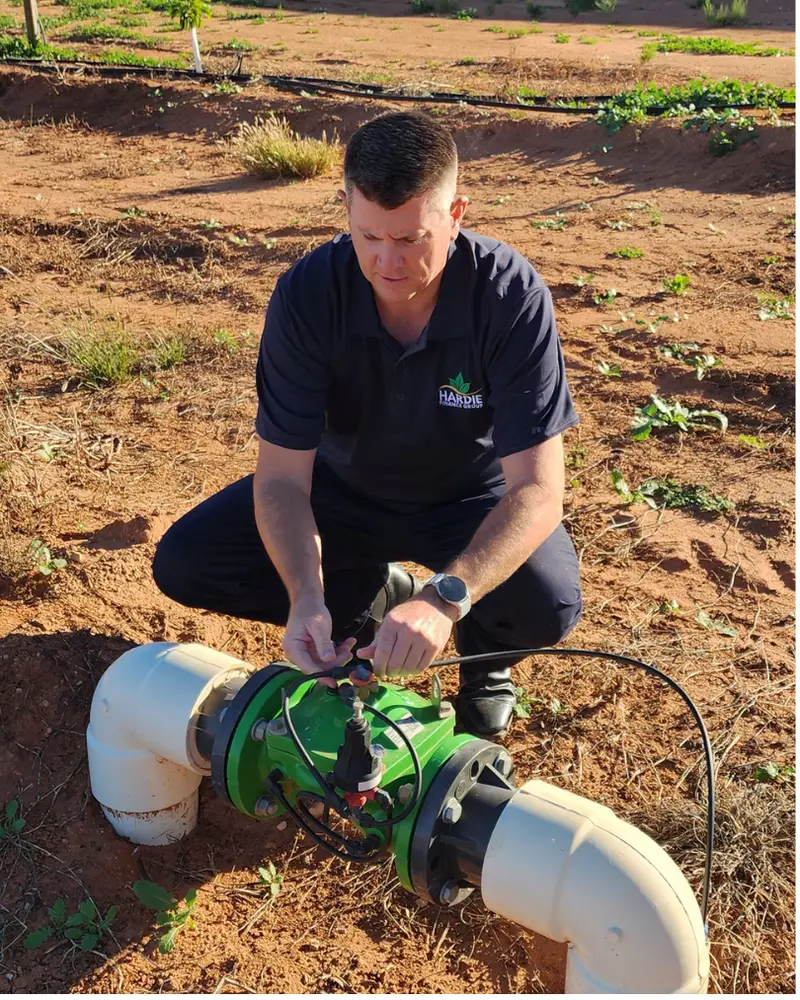
One of the hardest finance categories in agriculture. This is how to do it right.
Long establishment periods. No income in establishment years. Complex budgets. Few brokers know how to present it. This one does.
Why Farm Development Finance is Hard
The income gap that most lenders will not lend into.
What Lenders Need to See
A complete development application is six things. Most submissions are missing half of them.
Long-Term Development Structures
How to finance a 5 to 10 year development correctly.
Redevelopment Finance
When part of a running operation needs to be pulled out and replanted.
Why This Agri Broker
This is a niche most brokers will not touch.
This is a Niche Most Brokers Will Not Touch. Call Adrian.
The Ultimate Guide to Orchard and Farm Development Finance
Funding a New Development
How do I fund a new orchard development?
Securing orchard development finance is about managing the income gap between planting and first commercial harvest. We help growers access facilities that provide capital for trees, trellis, and irrigation while protecting existing farm equity.
Standard Funding Tranches:
- Land Acquisition/Refinance: Core mortgage debt used as the foundation for the development.
- Development Drawdowns: Staged funding released as milestones (clearing, irrigation, planting) are met.
- Working Capital: Overdrafts or seasonal facilities to cover inputs during the pre-revenue phase.
What is the cost to develop an orchard per hectare?
Estimating orchard development cost per hectare is the foundation of your bank ready business plan. In Australia, high density systems like modern citrus or almond orchards require higher upfront capital but deliver faster ROI through modern monitoring and delivery systems.
| Crop Type | Est. Capital Intensity | Primary Drivers |
|---|---|---|
| Almonds/Nuts | Moderate, depending on scale | Irrigation, tree stock, earthworks, fertigation. |
| Avocados | Medum - High | Tree price, drainage, mounding, cooling and/or frost protection. |
| Table Grapes | High | Trellis & posts, irrigation, hail netting. |
What do lenders look for in farm development?
Meeting farm development loan requirements requires more than just high equity. Lenders need to see a "Bankable Feasibility Study" that accounts for varietal performance, market offtake agreements, and robust contingency planning.
Key Assessment Criteria:
- Water Security: Proof of long-term entitlements or robust water strategy to sustain the orchard through drought.
- Management Track Record: Your history of successfully bringing crops to market.
- Financial Modelling: 5 years, and sometime up to 10 years, of projections including 'sensitivity tests' for price and yield drops.
Can I borrow against future farm income?
Securing a future income farm loan is the key to scaling without huge personal cash reserves. By valuing the orchard on its "Net Present Value" (NPV) once established, we can help you unlock significantly more capital than a standard rural mortgage.
How Banks View Projected Income:
- Off-take Agreements: Contracts with packers/exporters provide the highest level of income certainty for lenders.
- Industry Data: Using conservative ABARES or industry body yield data to prove serviceability.
- Valuation on Completion: Getting a valuer to assess what the farm will be worth in year 5 to justify the total debt.
How much equity do I need?
Your farm loan deposit doesn't necessarily have to be cash. In Australian agribusiness, your equity can be leveraged to fund new orchard blocks. The lenders will cross-collateralise the existing farm/s with the new propoerty or project for security.
| Asset Type | Typical Max LVR | Equity Requirement |
|---|---|---|
| Broadacre Land | 70% | 30%. Cash or Equity |
| Water Entitlements | 50 - 60% | 40% - 50%. Highly liquid asset |
| Horticulture | 50% - 65% | Higher risk, requires more buffer. |
How do I build a bank-ready development plan?
A successful farm business plan for banks isn't just a budget, it's a strategic roadmap that proves you understand the risks of horticulture and development. Your plan must demonstrate how the development will enhance the overall business's debt-servicing capacity once the trees reach maturity.
Core Pillars of a Bankable Plan:
- Executive Summary: Clear "Ask" for funding and the specific ROI target.
- Operational Capacity: Biographies of your management team and agronomic consultants.
- Water Security Audit: Direct proof of entitlements or watery strategy document with delivery infrastructure reliability.
- Marketing Strategy: Evidence of offtake agreements or relationships with established packers/exporters.
Modelling & Viability
What financial modelling is required?
Accurate farm financial modelling for orchards requires a "Net Present Value" (NPV) approach over a 10-15 year horizon. Unlike annual crops, orchard models must track cumulative negative cash flow until the "break-even" harvest is achieved.
| Model Component | Why It Is Required |
|---|---|
| P&L Projections | Tracks the transition from development cost to harvest revenue. |
| Monthly Cash Flow | Identifies the exact peak debt required during the growing season. |
| LVR & Equity Tracking | Shows the bank how the asset value grows as trees mature. |
What yield assumptions do banks accept?
Setting realistic crop yield assumptions for finance is a balancing act. For high-growth sectors like almonds, banks typically look for yield profiles that follow a standard maturity curve rather than aggressive early cropping targets.
Typical Maturity Yield Curves (Tonnes/Ha):
- Year 3-4 - First Crop will be light. The budget should reflect that assumption.
- Year 5-6 - Scaling up with yields to match. Some debt servicing can begin.
- Year 7+ - Maturity. Peak profitability. This should be the year in year out sustainable picture.
How do I prove viability?
An orchard viability analysis must address the Internal Rate of Return (IRR) compared to the cost of debt. To the bank, viability means your farm can weather a 30% drop in commodity prices and still meet interest obligations.
The Viability Checklist:
- DSCR (Debt Service Cover Ratio): Aim for a minimum of 1.5x coverage at full production. Most banks will be happy with anything over 1.3x
- Break-Even Price: What is the lowest price per Kg you can accept and still break even?
- ICR (Interet Cover Ratio): Aim for a minimum of 1.5x ICR and up to 2.0x. This ensures bank interest can be easily met with sufficient surplus for amoritsation, reinvestment and/or TAX.
Timelines for orchard profitability?
An orchard profitability timeline is dictated by the biological growth curve of the tree/vine/plant. Understanding the "Payback Period". That is, the moment when cumulative cash flows turn positive, is essential for matching your loan term to the asset type and class.
Typical tree crop timeline:
| Development Phase | Timeline (Years) | Financial Milestone |
|---|---|---|
| Establishment | 0 - 3 | Net Cash Outflow (Peak Debt). |
| Commercial Scaling | 4 - 6 | Operational Break-Even (P&L Positive). |
| Capital Recovery | 7 - 15 | Full Payback of Initial Investment. |
Managing cash flow in non-income years?
The biggest risk to orchard establishment cash flow is the liquidity gap before year 4-5. Success requires a debt structure that accounts for high operational expenses like water, fertiliser, and labour, without the support of seasonal revenue.
Cash Flow Protection Strategies:
- Capitalised Interest: Interest is added to the loan balance instead of paid monthly, preserving cash.
- Operating Overdrafts: Pre-approved limits specifically to cover non-capitalised operating costs.
- Staged Drawdowns: Accessing funds only as needed to minimise total interest expense in the early years.
Loan Structures & Staging
Best loan structure for greenfield developments?
The ideal greenfield farm loan structure aligns debt service with the biological growth of the orchard. Unlike buying an existing operation, greenfield projects require "patient capital" that doesn't demand principal reduction until the asset is income-producing.
| Facility Component | Purpose | Typical Terms |
|---|---|---|
| Core Mortgage | Land Acquisition | Variable/Fixed, 15-20 years. |
| Development Line | Establishment Costs | Interest-Only, 3-5 years. |
| Asset Finance | Irrigation & Tech | Chattel Mortgage, 5-7 years. |
Can I defer repayments?
Utilising interest-only farm loans is a strategic move for new projects or redevelopment. Lenders specialising in Australian Ag understand that demanding principal and interest (P&I) during the non-productive phase can jeopardise the health of the trees and the long-term viability of the project.
Repayment Flexibility Options:
- Repayment Deferral: 12-24 month windows where no payments are required (interest accrues).
- Interest-Only (IO): Fixed terms of 3, 5, or 7 years to match the orchard's maturity curve.
- Balloon Payments: Structuring smaller periodic payments with a larger final payment aligned with peak production.
Should I split land and development finance?
Using a split loan structure for your farm is highly effective for managing risk. By funding land through a long-term mortgage and using a separate facility for development (CAPEX), you create a transparent audit trail for tax and valuation purposes.
Why Split the Loans?
- Easily Verify CAPEX: If development costs start to blow out, you can identify and address issues early.
- Easier Restructuring: You can restructure the development loan into a cheaper P&I loan once harvest begins without touching the land mortgage.
- LVR Optimisation: Banks often offer better rates on land (lower risk) than on "speculative" development costs.
How do I fund staged development?
Successful staged farm development finance is the safest way to scale. Instead of borrowing for a large project upfront, we help you structure a progressive drawdown loan that releases capital as you hit key milestones, reducing your overall risk profile. Lenders like the transparancy and ability to trigger 'right of review' if milestones are missed.
| Stage | Funding Event | Key Milestone |
|---|---|---|
| 1 | Initial Planting | Largest phase due to subsequent requirments needing to be funded as part of the initial phase, for example, pump, mains and submains might be needed for multiple stages now. |
| 2 | Expansion | Continue plantings. This could be within months or multiple years. Funding is released only upon completion and verification of successful first stage. |
| 3 | Production & ongoing development | Previous stages complete and initial planting start generating income. This assists with the ongoing development and/or future redevelopment. |
How long does it take for an orchard to become profitable?
Understanding the time to profit for your orchard or vineyard is critical for debt structuring. Most Australian tree and vine crops follow a biological curve. Building up to a commercial crop can take 2-3 years table grape, or 10-12 years for pistachios. We help model the financial inpact of this time cost.
Standard Payback Milestones:
- Development and Planting: Investment Phase (100% Outflow).
- Growth years: Low yield,if any, with negative revenue. (Cash net outflow)
- Light crop: Operational Break-Even, or close to it (Revenue > OPEX + Interest).
- Commercial crop: Full Crop. Net profits sufficient to amortise debt (Strong positive revenue).
Crop Choice & Infrastructure
What are the highest ROI horticulture crops in Australia?
Identifying profitable crops in Australia requires balancing market demand with local growing conditions. "High Value" doesn't just mean high price; it means the highest net margin after accounting for water, labour, and specialised infrastructure costs.
| Factor | Why It Matters | Variability Risk |
|---|---|---|
| Market Timing | Early or late season windows can materially impact pricing. | High. Pricing shifts year to year based on a range key drivers. |
| Water Availability & Cost | Direct input cost and constraint on scale and yield. | High. Driven by allocation and seasonal conditions. |
| Labour Intensity | Harvest and pruning costs materially affect net margins. | Moderate–High. Availability and wage pressure fluctuate. |
| Capital Intensity | Higher upfront investment increases exposure to execution risk. | Moderate. Depends on design and scale. |
| Export Exposure | Access to offshore markets can improve pricing but adds volatility. | High. FX, trade access, and global supply impact returns. |
How do crop choices affect finance approval?
Your crop risk profile directly impacts your interest rate and LVR. Lenders categorise crops by their perceived risk. Permanent plantings like almonds or citrus are viewed differently than dryland/broadacre farms due to the nature of the capital intensity and long gestation periods.
How Lenders Assess Crop Risk:
- Market Depth: Established domestic and export markets are generally easier for lenders to assess than emerging or niche commodities.
- Income Stability: Crops with consistent yield profiles and less price volatility are viewed more favourably over time.
- Development Profile: Longer establishment periods and higher upfront capital requirements increase exposure during the early years.
- Operational Complexity: Labour intensity, perishability, and reliance on timing can all influence risk perception.
- Track Record: Proven performance of the operator often matters more than the crop itself.
What are the biggest mistakes in orchard establishment?
Avoiding orchard establishment mistakes starts with robust planning. Many growers focus on the "cost to plant" but ignore the "cost to reach harvest," leading to mid-project funding crises that stall growth and damage tree health.
Top 3 Mistakes to Avoid:
- Inadequate Drainage: "Wet feet" in Year 1 can set a development back by several years or lead to permanent tree loss.
- Underestimating Working Capital: Thinking you only need to borrow for infrastructure, not for the 4 years of fertiliser and water bills.
- Poor Varietal Selection: Planting what is popular today rather than what will be in high demand in 10 years.
How do I finance farm infrastructure?
Securing farm infrastructure finance is essential for scaling operations without depleting your working capital. Whether you are installing large-scale grain storage or advanced cooling facilities, the goal is to align your repayments with the increased efficiency or revenue the asset generates combined with the depreciation of the asset.
Infrastructure Funding Pathways:
- Asset Finance / Chattel Mortgage: Ideal for "movable" or modular assets like silos, solar panels, and packing equipment.
- Term Debt / Mortgage: Best for permanent structures like sheds, dams, and concrete yards that add long-term value to the land.
- Leasing: Useful for technology-heavy infrastructure that may require upgrading in 5-7 years.
Invest upfront or stage infrastructure?
Managing CAPEX timing in agriculture is a strategic balancing act. Staging infrastructure can reduce financial stress during the establishment years, but "retrofitting" systems later can often be significantly more expensive than building to full capacity on day one.
| Strategy | Best For | Key Risk |
|---|---|---|
| Upfront | High-growth crops; when interest rates are low. | Initial liquidity strain. |
| Staged | Orchard expansions; uncertain market demand. | Interrupted operations during Phase 2. |
| Hybrid | Building 'the backbone' now; adding tech later. | Technology compatibility issues. |
What improvements add most value?
Calculating farm improvements ROI helps you prioritise spending. To a valuer, the most valuable improvements are those that make the farm "drought-proof" or "labour-efficient," as these factors dictate the long-term capitalisation rate of the property.
Highest ROI Improvements:
- Water Security: Bores, dams, and high-efficiency irrigation systems.
- Energy Independence: Large-scale solar and battery storage to offset rising electricity costs.
- Storage & Logistics: On-farm silos or cold storage that allow you to time the market rather than selling at harvest.
- Digital Infrastructure: High-speed farm-wide Wi-Fi to support automation and telemetry.
Can infrastructure be used as security?
Leveraging farm loan security assets allows you to borrow without always putting the family home or the home block on the line. Using the infrastructure itself as collateral (via a Chattel Mortgage) is a standard way to fund growth while keeping land equity available for other opportunities.
What Assets Can Be Used?
- Movable Plant: Tractors, harvesters, and centre pivots. Anything with wheels or easily disassembled.
- Modular Infrastructure: Silos, transportable worker housing, cooling units.
- Water Entitlements: While not 'infrastructure' per se, they are often bundled with infrastructure loans as high-quality security.
Risk & Growth Strategy
Biggest financial risks in farm development?
Navigating farm development risks is about anticipating the "unknown unknowns." In Australian horticulture, the risk isn't just about the crop failing; it's about the financial structure failing to survive the long period before first commercial revenue.
Top Financial Threats:
- Stranded Asset Risk: Completing a development but lacking the water allocation or working capital to maintain it during a drought or industry downturn.
- Interest Rate Exposure: Rising debt costs on a non-income producing asset during the establish phase.
- Market Price Shifts: Commodity prices dropping between the time of planting and the first harvest 5 years later.
External Variables (Often Outside Operator Control):
- Water Pricing & Delivery: Allocation levels, temporary water pricing, and delivery constraints can materially impact cost of production.
- FX Exposure: Exchange rate movements influence export returns and input costs.
- Geopolitical Factors: Trade access, tariffs, and biosecurity restrictions can shift market access quickly.
- Climate Variability: Frost, heat events, and rainfall variability impact both yield and quality.
How do I scale without overextending?
A sustainable farm expansion finance strategy is built on "incremental scaling." Instead of a massive, single-stage expansion that maxes out your LVR and chews up your working capital. Use the cash flow from established blocks to fund the development of new ones.
The Safe Scaling Framework:
- Retained Earnings: Aim to fund at least 20% of expansion costs from your own cash reserves.
- Modular Infrastructure: Build packing and cooling facilities that can be expanded in sections as yield increases.
- Labour Efficiency: Only scale as fast as your management team can oversee. Operational overextension is just as dangerous as financial overreach.
Expand vs consolidate?
Making the farm expansion decision requires a cold look at your current efficiency. In many cases, investing capital into better irrigation or soil health on your current land (consolidation) offers a faster payback than the high entry price of new land.
| Scenario | Choose Expansion If... | Choose Consolidation If... |
|---|---|---|
| Market Price | Land prices are low; demand is rising. | Land prices are at record highs. |
| Efficiency | Your current farm is at peak yield/ha. | You have underperforming blocks. |
| Cash Flow | You have surplus cash for deposits. | You are currently relying on overdrafts. |
How do banks assess expansion vs new?
Understanding the bank assessment for farm expansion can help you secure better terms. Lenders prefer "bolt-on" acquisitions. Buying the neighbour's block or adding a new block to an existing hub leverages your existing staff, machinery, and packing sheds.
Bank Assessment Priorities:
- Historical Performance: Historical financials proving you can manage your current scale profitably.
- Synergy Value: Work out the lower cost-per-unit through "economies of scale."
- Serviceability: Can the new block pay for its own debt, or can the existing business cover any shorfall?
Agri Broker.com.au – A service of Hardie Finance Group • FarmLending.com.au
© 2026 Hardie Finance Group Pty Ltd. All rights reserved. | Legal
Talk it through with a specialist.
Complimentary initial conversation. Most questions answered in one call.
Explore more: Home · FAQ · Water Finance