Farm Development Finance

One of the hardest finance categories in agriculture. This is how to do it right.

Long establishment periods. No income in establishment years. Complex budgets. Few brokers know how to present it. This one does.
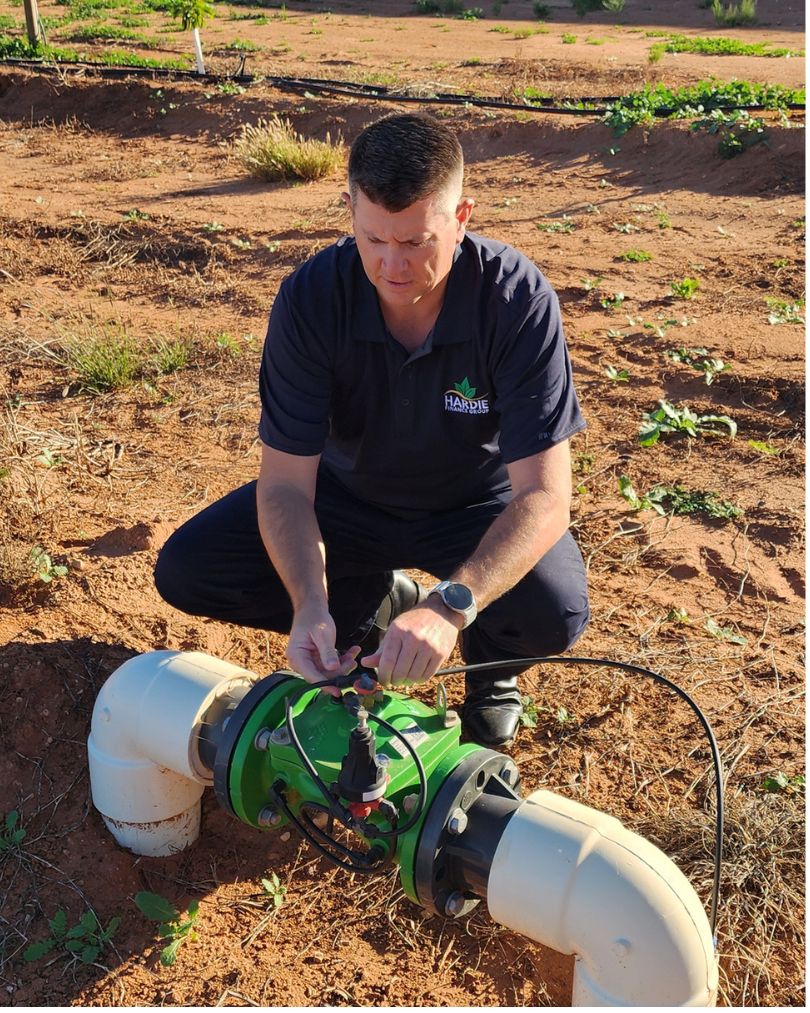
Adrian Hardie inspecting irrigation infrastructure on his farm after getting Farm Development Finance

Adrian Hardie – Active Grower

“I’ve been through a farm development myself. I know the income gap, the bank conversations, and the uncertainty. That experience shapes every deal I structure.”

Why Farm Development Finance is Hard

The income gap that most lenders will not lend into.

The fundamental challenge with farm development finance is time. Lenders are trained to assess income. Development finance requires them to look at a gap in income, understand why it exists, and back an operation that will not produce meaningfully for years. Most do not know how.
Year 1
No harvestable production. Full cost of establishment. Loan balance growing.
Year 2
Cash flow negative. Trees or vines require intensive input.
Year 3
Early yields for vines. Revenue growing, but typically not yet covering full debt service. Tree crops are still cash flow negative.
Year 4-5
Vines now fully producing. Tree crops start producing some yield. Operation moving toward breakeven but still cash flow negative. Varies by crop type.
Year 5+
Tree crops now break even or some are cash flow positive. Entering commercial production. Finance structure should now be self sufficient.
Most lenders see year one and stop reading. A specialist sees the full arc, understands the crop-specific timeline, and structures finance around what the operation will become, not just what it is today.

What Lenders Need to See

A complete development application is six things. Most submissions are missing half of them.

A development finance application is only as strong as the documentation behind it. Lenders who do take these deals need a complete picture, presented in a format their credit team can assess. Here is what needs to be in front of them.
01
Stage-by-stage development budget
A detailed cost schedule covering land preparation, planting, trellis, irrigation, establishment inputs, and labour. Year by year, not as a single lump sum. Lenders need to see what the drawdown funds, and when.
02
Crop-specific production timeline
When does this crop variety start producing? At what volume? What does a normal yield curve look like for this region and rootstock? Lenders unfamiliar with horticulture need this explained clearly and credibly.
03
Cash flow projections across the development period
Revenue, costs, debt service obligations, and the gap between them. Across multiple years. Showing how the operation moves from development phase to production phase, and what that means for loan repayment.
04
Security analysis and asset position
Land value, water entitlements, existing infrastructure, and any other security. A development loan needs strong underlying security because income during establishment is limited. The numbers need to stack up from day one.
05
Operator credibility and experience
Who has done this before? Track record of managing similar operations, working with agronomists, meeting development milestones. Lenders back operators as much as assets, especially on development deals.
06
A specialist broker presenting it correctly
Even the strongest development proposal gets declined when it is not framed correctly. The numbers need context, the timeline needs explanation, and the risk needs to be presented as managed, not unknown.
Most development finance applications are declined not because the deal is weak, but because the application is incomplete or written in the wrong language for the credit team. That is fixable.

Long-Term Development Structures

How to finance a 5 to 10 year development correctly.

Getting a 5 to 10 year farm development financed correctly requires a structure most lenders have never built and most brokers have never asked for. The finance needs to match the crop, not a standard commercial loan template.
1
Interest-only periods aligned to the development timeline
Standard IO periods of 1 to 2 years are not enough for permanent plantings. Finance for a new avocado, citrus or tree nut block may need a 4 to 5 year interest-only period before any principal repayment begins. This requires a lender willing to structure around the crop.
2
Capitalised interest during establishment
In most cases, even interest cannot be serviced in year one or two without external income. Capitalising interest into the loan balance during the establishment phase is a legitimate structure. Few brokers know how to present it. Fewer lenders will approve it without specialist advocacy.
3
Staged drawdown matched to the development schedule
A development loan should not be fully drawn from day one. Drawdowns should match the stage of development. This reduces interest costs during establishment and gives the lender visibility into how funds are being deployed at each milestone.
4
Conversion from development to term at project completion
The finance structure used during development is not the right structure for a mature producing operation. At completion, the loan should convert to a term facility that reflects the income-generating capacity of the finished development. Planning for this from the start is difficult, but critical.

Redevelopment Finance

When part of a running operation needs to be pulled out and replanted.

Redevelopment finance is a different challenge from new development. The operation is already running. Part of it is being removed and replanted. Income drops during the transition. Lenders see a performing asset that is about to perform less well, and many will step back.
Why redevelopment creates a lending gap
When you pull out old trees or non-performing varieties to replant, you lose income from that block for years. If that block represents a significant share of your revenue, debt serviceability drops during the transition. A lender assessing current income cannot see past this. A specialist can model the bridge and present the full picture.
Bridge finance for the transition period
The right structure for a redevelopment deal often involves a bridge facility that covers the income gap during establishment. This is not complicated to explain to the right lender. The difficulty is finding a broker who understands what to ask for and can present the redevelopment plan credibly.
Framing redevelopment as a managed risk, not a red flag
An agronomically sound redevelopment plan, executed by an experienced operator, is not a red flag. It is an investment in the future productivity of the asset. The finance case needs to make this clear, with documentation that supports the plan and a broker who can explain it in credit language.
“A redevelopment is not a problem. It is a plan. Finance it like one.”

Why This Agri Broker

This is a niche most brokers will not touch.

Development finance is a niche most generalist brokers will not touch. The deals are complex, the timelines are long, and the documentation requirements are demanding. This Agri Broker works in this space regularly.
Knows the crops and the timelines
With a Masters in Agribusiness and active experience as an avocado producer, the development timelines for permanent plantings are not abstract. They are familiar. This credibility translates directly into more convincing finance cases.
Knows which lenders will consider these deals
Most lenders will not touch a development deal. Some will. This Agri Broker knows which lenders have the appetite, the specialist credit teams, and the track record of settling development finance. That knowledge saves time and avoids unnecessary declines.
Presents the case in the right language
A development finance application needs to be written for credit assessors, not growers. The terminology, the structure of the documentation, and the framing of the risk all matter. This is not a skill that comes from doing a handful of residential mortgages.
Structures the deal for the full development cycle
Not just getting approval. Getting approval for a structure that actually works for the five-year arc of the development. That means interest-only periods, staged drawdowns, capitalised interest where appropriate, and a clear path from development to production.

This is a Niche Most Brokers Will Not Touch. Call Adrian.

Farm development finance is one of the most complex and least understood finance categories in Australian agriculture. Most brokers will not take these deals on. This Agri Broker does, regularly, and knows how to get them across the line.
Ready to talk development finance?
Call Adrian: 0494 578 218
Explore more: Home  •  FAQ  •  Water Finance

The Ultimate Guide to Orchard and Farm Development Finance

Jump to a section:

How do I fund a new orchard development?

Securing orchard development finance is about managing the income gap between planting and first commercial harvest. We help growers access facilities that provide capital for trees, trellis, and irrigation while protecting existing farm equity.

Standard Funding Tranches:

  • Land Acquisition/Refinance: Core mortgage debt used as the foundation for the development.
  • Development Drawdowns: Staged funding released as milestones (clearing, irrigation, planting) are met.
  • Working Capital: Overdrafts or seasonal facilities to cover inputs during the pre-revenue phase.
Lender's Secret: You're not just ask for a loan, you may need to pause principal repayments. Many specialist agribusiness lenders will allow interest only terms for the first 3-5 years until commercial yield begins.
View Orchard Finance Options →

What is the cost to develop an orchard per hectare?

Estimating orchard development cost per hectare is the foundation of your bank ready business plan. In Australia, high density systems like modern citrus or almond orchards require higher upfront capital but deliver faster ROI through modern monitoring and delivery systems.
Crop TypeEst. Capital IntensityPrimary Drivers
Almonds/NutsModerate, depending on scaleIrrigation, tree stock, earthworks, fertigation.
AvocadosMedum - HighTree price, drainage, mounding, cooling and/or frost protection.
Table GrapesHighTrellis & posts, irrigation, hail netting.
Agronomy Note: Underestimating the cost of 'staged inputs' (fertiliser, water and pruning) in years 2 and 3 is a common trap. Ensure your development budget covers the cost to *reach* maturity, not just the first year of planting.
Request a Costing Template →

What do lenders look for in farm development?

Meeting farm development loan requirements requires more than just high equity. Lenders need to see a "Bankable Feasibility Study" that accounts for varietal performance, market offtake agreements, and robust contingency planning.

Key Assessment Criteria:

  • Water Security: Proof of long-term entitlements or robust water strategy to sustain the orchard through drought.
  • Management Track Record: Your history of successfully bringing crops to market.
  • Financial Modelling: 5 years, and sometime up to 10 years, of projections including 'sensitivity tests' for price and yield drops.
Pro-Tip: Most bank rejections happen because the "contingency" was missing. Stress testing for both input costs and price/yield variabilities, and then deomonstraet sufficeint cash buffer to your development budget actually makes the bank more likely to approve the loan, as it shows maturity in your planning and management.
Check Your Eligibility →

Can I borrow against future farm income?

Securing a future income farm loan is the key to scaling without huge personal cash reserves. By valuing the orchard on its "Net Present Value" (NPV) once established, we can help you unlock significantly more capital than a standard rural mortgage.

How Banks View Projected Income:

  • Off-take Agreements: Contracts with packers/exporters provide the highest level of income certainty for lenders.
  • Industry Data: Using conservative ABARES or industry body yield data to prove serviceability.
  • Valuation on Completion: Getting a valuer to assess what the farm will be worth in year 5 to justify the total debt.
Lender's Secret: Specialist lenders can allow for Capitalised Interest, meaning you don't pay a cent during the establishment phase. The interest is added to the loan and repaid once the first commercial harvest is sold.
Model Your Future Income →

How much equity do I need?

Your farm loan deposit doesn't necessarily have to be cash. In Australian agribusiness, your equity can be leveraged to fund new orchard blocks. The lenders will cross-collateralise the existing farm/s with the new propoerty or project for security.
Asset TypeTypical Max LVREquity Requirement
Broadacre Land70%30%. Cash or Equity
Water Entitlements50 - 60%40% - 50%. Highly liquid asset
Horticulture 50% - 65%Higher risk, requires more buffer.
Pro-Tip: Requirments change between lenders, industries and asset classes. Don't let security be the reason to hold back your plans. There are many different ways to leverage assets, not just from physical land assets or 'bricks and mortor' security.
Calculate Your Borrowing Power →

How do I build a bank-ready development plan?

A successful farm business plan for banks isn't just a budget, it's a strategic roadmap that proves you understand the risks of horticulture and development. Your plan must demonstrate how the development will enhance the overall business's debt-servicing capacity once the trees reach maturity.

Core Pillars of a Bankable Plan:

  • Executive Summary: Clear "Ask" for funding and the specific ROI target.
  • Operational Capacity: Biographies of your management team and agronomic consultants.
  • Water Security Audit: Direct proof of entitlements or watery strategy document with delivery infrastructure reliability.
  • Marketing Strategy: Evidence of offtake agreements or relationships with established packers/exporters.
Lender's Secret: Banks look for "Stress-Tested" plans. Include a section that shows how the business survives a 20% drop in commodity prices combined with a 2-year drought. This transparency builds massive credibility with credit departments.
Get a Plan Template →

What financial modelling is required?

Accurate farm financial modelling for orchards requires a "Net Present Value" (NPV) approach over a 10-15 year horizon. Unlike annual crops, orchard models must track cumulative negative cash flow until the "break-even" harvest is achieved.
Model ComponentWhy It Is Required
P&L ProjectionsTracks the transition from development cost to harvest revenue.
Monthly Cash FlowIdentifies the exact peak debt required during the growing season.
LVR & Equity TrackingShows the bank how the asset value grows as trees mature.
Pro-Tip: Ensure your model accounts for Interest. If you aren't making repayments during the first 3 years, that interest must be tracked as part of your total peak debt requirement.
Review Your Projections →

What yield assumptions do banks accept?

Setting realistic crop yield assumptions for finance is a balancing act. For high-growth sectors like almonds, banks typically look for yield profiles that follow a standard maturity curve rather than aggressive early cropping targets.

Typical Maturity Yield Curves (Tonnes/Ha):

  • Year 3-4 - First Crop will be light. The budget should reflect that assumption.
  • Year 5-6 - Scaling up with yields to match. Some debt servicing can begin.
  • Year 7+ - Maturity. Peak profitability. This should be the year in year out sustainable picture.
Agronomy Note: Always cite your sources. If you use yield data from industry reports, the bank's credit team is far more likely to accept the numbers without discounting. It also makes it easy for them to check and verify the data for themselves.
Benchmark Your Yields →

How do I prove viability?

An orchard viability analysis must address the Internal Rate of Return (IRR) compared to the cost of debt. To the bank, viability means your farm can weather a 30% drop in commodity prices and still meet interest obligations.

The Viability Checklist:

  • DSCR (Debt Service Cover Ratio): Aim for a minimum of 1.5x coverage at full production. Most banks will be happy with anything over 1.3x
  • Break-Even Price: What is the lowest price per Kg you can accept and still break even?
  • ICR (Interet Cover Ratio): Aim for a minimum of 1.5x ICR and up to 2.0x. This ensures bank interest can be easily met with sufficient surplus for amoritsation, reinvestment and/or TAX.
Lender's Secret: We prove viability by using Comparative Analysis along with industry insights. By showing the bank the success of existing orchards in your immediate area with similar soil and water profiles, we de-risk your individual project.
Start Your Viability Audit →

Timelines for orchard profitability?

An orchard profitability timeline is dictated by the biological growth curve of the tree/vine/plant. Understanding the "Payback Period". That is, the moment when cumulative cash flows turn positive, is essential for matching your loan term to the asset type and class.

Typical tree crop timeline:

Development PhaseTimeline (Years)Financial Milestone
Establishment0 - 3Net Cash Outflow (Peak Debt).
Commercial Scaling4 - 6Operational Break-Even (P&L Positive).
Capital Recovery7 - 15Full Payback of Initial Investment.
Agronomy Note: Fast growing varieties or high-density planting can pull the profitability timeline forward by 1-2 years. While CAPEX is higher upfront, the faster revenue and reduction in interest costs over the life of the project can be massive.
Model Your Payback Period →

Managing cash flow in non-income years?

The biggest risk to orchard establishment cash flow is the liquidity gap before year 4-5. Success requires a debt structure that accounts for high operational expenses like water, fertiliser, and labour, without the support of seasonal revenue.

Cash Flow Protection Strategies:

  • Capitalised Interest: Interest is added to the loan balance instead of paid monthly, preserving cash.
  • Operating Overdrafts: Pre-approved limits specifically to cover non-capitalised operating costs.
  • Staged Drawdowns: Accessing funds only as needed to minimise total interest expense in the early years.
Lender's Secret: Lenders prefer a fully funded model. If you show a cash flow gap in year 3, they may decline the whole project. We ensure your facility includes enough headroom to reach the first commercial harvest.
Plan Your Cash Flow →

Best loan structure for greenfield developments?

The ideal greenfield farm loan structure aligns debt service with the biological growth of the orchard. Unlike buying an existing operation, greenfield projects require "patient capital" that doesn't demand principal reduction until the asset is income-producing.
Facility ComponentPurposeTypical Terms
Core MortgageLand AcquisitionVariable/Fixed, 15-20 years.
Development LineEstablishment CostsInterest-Only, 3-5 years.
Asset FinanceIrrigation & TechChattel Mortgage, 5-7 years.
Credit Insight: Model your "peak debt" position upfront. Most greenfield projects reach their highest debt level just before first commercial harvest. Ensure the structure can carry interest and operating costs through this period without relying on optimistic yield assumptions or land value appreciation .
Structure Your Loan →

Can I defer repayments?

Utilising interest-only farm loans is a strategic move for new projects or redevelopment. Lenders specialising in Australian Ag understand that demanding principal and interest (P&I) during the non-productive phase can jeopardise the health of the trees and the long-term viability of the project.

Repayment Flexibility Options:

  • Repayment Deferral: 12-24 month windows where no payments are required (interest accrues).
  • Interest-Only (IO): Fixed terms of 3, 5, or 7 years to match the orchard's maturity curve.
  • Balloon Payments: Structuring smaller periodic payments with a larger final payment aligned with peak production.
Lender's Secret: A "repayment deferral" is different from "capitalised Interest." With a deferral, you usually still need to prove the cash will be there eventually. Capitalised interest is pre-approved debt headroom. We help you structure for your situation.
Request Deferral Terms →

Should I split land and development finance?

Using a split loan structure for your farm is highly effective for managing risk. By funding land through a long-term mortgage and using a separate facility for development (CAPEX), you create a transparent audit trail for tax and valuation purposes.

Why Split the Loans?

  • Easily Verify CAPEX: If development costs start to blow out, you can identify and address issues early.
  • Easier Restructuring: You can restructure the development loan into a cheaper P&I loan once harvest begins without touching the land mortgage.
  • LVR Optimisation: Banks often offer better rates on land (lower risk) than on "speculative" development costs.
Pro-Tip: Splitting also allows you to use different lenders. You might have a traditional bank for the land, but a specialist private lender for the fast-paced development phase where speed of drawdown is critical.
Compare Split Structures →

How do I fund staged development?

Successful staged farm development finance is the safest way to scale. Instead of borrowing for a large project upfront, we help you structure a progressive drawdown loan that releases capital as you hit key milestones, reducing your overall risk profile. Lenders like the transparancy and ability to trigger 'right of review' if milestones are missed.
StageFunding EventKey Milestone
1Initial PlantingLargest phase due to subsequent requirments needing to be funded as part of the initial phase, for example, pump, mains and submains might be needed for multiple stages now.
2ExpansionContinue plantings. This could be within months or multiple years. Funding is released only upon completion and verification of successful first stage.
3 Production & ongoing developmentPrevious stages complete and initial planting start generating income. This assists with the ongoing development and/or future redevelopment.
Lender's Secret: Staging is a powerful tool for building lender trust. Once a bank sees you bring Stage 1 into production on time and on budget, they are significantly more likely to offer cheaper rates and higher LVRs for Stage 2.
Plan Your Expansion →

How long does it take for an orchard to become profitable?

Understanding the time to profit for your orchard or vineyard is critical for debt structuring. Most Australian tree and vine crops follow a biological curve. Building up to a commercial crop can take 2-3 years table grape, or 10-12 years for pistachios. We help model the financial inpact of this time cost.

Standard Payback Milestones:

  • Development and Planting: Investment Phase (100% Outflow).
  • Growth years: Low yield,if any, with negative revenue. (Cash net outflow)
  • Light crop: Operational Break-Even, or close to it (Revenue > OPEX + Interest).
  • Commercial crop: Full Crop. Net profits sufficient to amortise debt (Strong positive revenue).
Lender's Secret: Banks focus on the "Operational Break-Even" point. If your plan shows you can cover interest and operating costs for the duration of the gestation period, you'll find much easier access to competitive development rates.
Model Your Payback Period →

What are the highest ROI horticulture crops in Australia?

Identifying profitable crops in Australia requires balancing market demand with local growing conditions. "High Value" doesn't just mean high price; it means the highest net margin after accounting for water, labour, and specialised infrastructure costs.
FactorWhy It MattersVariability Risk
Market TimingEarly or late season windows can materially impact pricing.High. Pricing shifts year to year based on a range key drivers.
Water Availability & CostDirect input cost and constraint on scale and yield.High. Driven by allocation and seasonal conditions.
Labour IntensityHarvest and pruning costs materially affect net margins.Moderate–High. Availability and wage pressure fluctuate.
Capital IntensityHigher upfront investment increases exposure to execution risk.Moderate. Depends on design and scale.
Export ExposureAccess to offshore markets can improve pricing but adds volatility.High. FX, trade access, and global supply impact returns.
Pro-Tip: Don't chase "fad" crops or beleive what you read in social media. The highest ROI often comes from established industries where the logistics, packing sheds, and export protocols are already proven and reliable.
Consult on Crop Strategy →

How do crop choices affect finance approval?

Your crop risk profile directly impacts your interest rate and LVR. Lenders categorise crops by their perceived risk. Permanent plantings like almonds or citrus are viewed differently than dryland/broadacre farms due to the nature of the capital intensity and long gestation periods.

How Lenders Assess Crop Risk:

  • Market Depth: Established domestic and export markets are generally easier for lenders to assess than emerging or niche commodities.
  • Income Stability: Crops with consistent yield profiles and less price volatility are viewed more favourably over time.
  • Development Profile: Longer establishment periods and higher upfront capital requirements increase exposure during the early years.
  • Operational Complexity: Labour intensity, perishability, and reliance on timing can all influence risk perception.
  • Track Record: Proven performance of the operator often matters more than the crop itself.
Credit Insight: Forward sales agreements or established marketing channels can improve lender confidence, but they are typically assessed alongside the operator’s track record, cost structure, and overall project feasibility.
Check Your Crop's Bankability →

What are the biggest mistakes in orchard establishment?

Avoiding orchard establishment mistakes starts with robust planning. Many growers focus on the "cost to plant" but ignore the "cost to reach harvest," leading to mid-project funding crises that stall growth and damage tree health.

Top 3 Mistakes to Avoid:

  1. Inadequate Drainage: "Wet feet" in Year 1 can set a development back by several years or lead to permanent tree loss.
  2. Underestimating Working Capital: Thinking you only need to borrow for infrastructure, not for the 4 years of fertiliser and water bills.
  3. Poor Varietal Selection: Planting what is popular today rather than what will be in high demand in 10 years.
Agronomy Note: The cheapest trees are often the most expensive in the long run. High-quality, certified nursery stock ensures uniformity and early vigor, which is the fastest way to pull your profitability timeline forward.
Audit Your Development Plan →

How do I finance farm infrastructure?

Securing farm infrastructure finance is essential for scaling operations without depleting your working capital. Whether you are installing large-scale grain storage or advanced cooling facilities, the goal is to align your repayments with the increased efficiency or revenue the asset generates combined with the depreciation of the asset.

Infrastructure Funding Pathways:

  • Asset Finance / Chattel Mortgage: Ideal for "movable" or modular assets like silos, solar panels, and packing equipment.
  • Term Debt / Mortgage: Best for permanent structures like sheds, dams, and concrete yards that add long-term value to the land.
  • Leasing: Useful for technology-heavy infrastructure that may require upgrading in 5-7 years.
Lender's Secret: For infrastructure that improves sustainability (like solar or water recycling), many Australian banks now offer "Green Loans" with lower interest rates and flexible terms. Always ask for the ESG discount.
View Infrastructure Finance →

Invest upfront or stage infrastructure?

Managing CAPEX timing in agriculture is a strategic balancing act. Staging infrastructure can reduce financial stress during the establishment years, but "retrofitting" systems later can often be significantly more expensive than building to full capacity on day one.
StrategyBest ForKey Risk
UpfrontHigh-growth crops; when interest rates are low.Initial liquidity strain.
StagedOrchard expansions; uncertain market demand.Interrupted operations during Phase 2.
HybridBuilding 'the backbone' now; adding tech later.Technology compatibility issues.
Pro-Tip: Always build the "backbone" (e.g., larger mainlines or oversized electrical transformers) upfront. It is much cheaper to have underutilised capacity for 2 years than to dig up and replace undersized infrastructure in year 3.
Optimise Your CAPEX Plan →

What improvements add most value?

Calculating farm improvements ROI helps you prioritise spending. To a valuer, the most valuable improvements are those that make the farm "drought-proof" or "labour-efficient," as these factors dictate the long-term capitalisation rate of the property.

Highest ROI Improvements:

  • Water Security: Bores, dams, and high-efficiency irrigation systems.
  • Energy Independence: Large-scale solar and battery storage to offset rising electricity costs.
  • Storage & Logistics: On-farm silos or cold storage that allow you to time the market rather than selling at harvest.
  • Digital Infrastructure: High-speed farm-wide Wi-Fi to support automation and telemetry.
Agronomy Note: Soil health improvements (gypsum, mounding, drainage) are technically "infrastructure" in the bank's eyes. These often have the fastest ROI because they instantly boost yield across 100% of the planted area.
Request a Valuation Review →

Can infrastructure be used as security?

Leveraging farm loan security assets allows you to borrow without always putting the family home or the home block on the line. Using the infrastructure itself as collateral (via a Chattel Mortgage) is a standard way to fund growth while keeping land equity available for other opportunities.

What Assets Can Be Used?

  • Movable Plant: Tractors, harvesters, and centre pivots. Anything with wheels or easily disassembled.
  • Modular Infrastructure: Silos, transportable worker housing, cooling units.
  • Water Entitlements: While not 'infrastructure' per se, they are often bundled with infrastructure loans as high-quality security.
Lender's Secret: Lenders assess "depreciable life" of an asset. An asset that lasts 20 years (like a silo) is better security than one that lasts 5 years. We help you present your infrastructure portfolio in a way that maximises your total borrowing capacity.
Check Your Asset Security →

Biggest financial risks in farm development?

Navigating farm development risks is about anticipating the "unknown unknowns." In Australian horticulture, the risk isn't just about the crop failing; it's about the financial structure failing to survive the long period before first commercial revenue.

Top Financial Threats:

  • Stranded Asset Risk: Completing a development but lacking the water allocation or working capital to maintain it during a drought or industry downturn.
  • Interest Rate Exposure: Rising debt costs on a non-income producing asset during the establish phase.
  • Market Price Shifts: Commodity prices dropping between the time of planting and the first harvest 5 years later.

External Variables (Often Outside Operator Control):

  • Water Pricing & Delivery: Allocation levels, temporary water pricing, and delivery constraints can materially impact cost of production.
  • FX Exposure: Exchange rate movements influence export returns and input costs.
  • Geopolitical Factors: Trade access, tariffs, and biosecurity restrictions can shift market access quickly.
  • Climate Variability: Frost, heat events, and rainfall variability impact both yield and quality.
Credit Insight: Completion risk is a primary concern for lenders. Running short of capital late in development can materially weaken both the asset and your negotiating position. Conservative contingency planning is typically viewed more favourably than tightly stretched or optimistic budgets.
Audit Your Project Risk →

How do I scale without overextending?

A sustainable farm expansion finance strategy is built on "incremental scaling." Instead of a massive, single-stage expansion that maxes out your LVR and chews up your working capital. Use the cash flow from established blocks to fund the development of new ones.

The Safe Scaling Framework:

  • Retained Earnings: Aim to fund at least 20% of expansion costs from your own cash reserves.
  • Modular Infrastructure: Build packing and cooling facilities that can be expanded in sections as yield increases.
  • Labour Efficiency: Only scale as fast as your management team can oversee. Operational overextension is just as dangerous as financial overreach.
Pro-Tip: Check your "Debt per Megalitre" or "Debt per Hectare" against industry benchmarks. If your expansion pushes you into the top 10% of debt-heavy farms in your sector, you are likely overextended.
Consult on Scaling Strategy →

Expand vs consolidate?

Making the farm expansion decision requires a cold look at your current efficiency. In many cases, investing capital into better irrigation or soil health on your current land (consolidation) offers a faster payback than the high entry price of new land.
ScenarioChoose Expansion If...Choose Consolidation If...
Market PriceLand prices are low; demand is rising.Land prices are at record highs.
EfficiencyYour current farm is at peak yield/ha.You have underperforming blocks.
Cash FlowYou have surplus cash for deposits.You are currently relying on overdrafts.
Agronomy Note: Consolidation is often the "hidden" path to growth. Improving your yield from 15t/ha to 18t/ha across an existing 100ha farm is equivalent to buying 20ha of new land, without the extra mortgage or rates.
Get a Strategic Review →

How do banks assess expansion vs new?

Understanding the bank assessment for farm expansion can help you secure better terms. Lenders prefer "bolt-on" acquisitions. Buying the neighbour's block or adding a new block to an existing hub leverages your existing staff, machinery, and packing sheds.

Bank Assessment Priorities:

  • Historical Performance: Historical financials proving you can manage your current scale profitably.
  • Synergy Value: Work out the lower cost-per-unit through "economies of scale."
  • Serviceability: Can the new block pay for its own debt, or can the existing business cover any shorfall?
Lender's Secret: When applying for expansion, emphasise "overhead dilution." Showing the bank that your fixed costs (management, sheds, tractors) will now be spread over more hectares makes your whole business a much more attractive lending prospect.
Check Your Borrowing Capacity →
↑ Back to Menu
↑ Back to Top

Agri Broker.com.au — A service of Hardie Finance GroupFarmLending.com.au

© 2026 Hardie Finance Group Pty Ltd. All rights reserved. | Legal

Water Finance Farm Development FAQ Legal